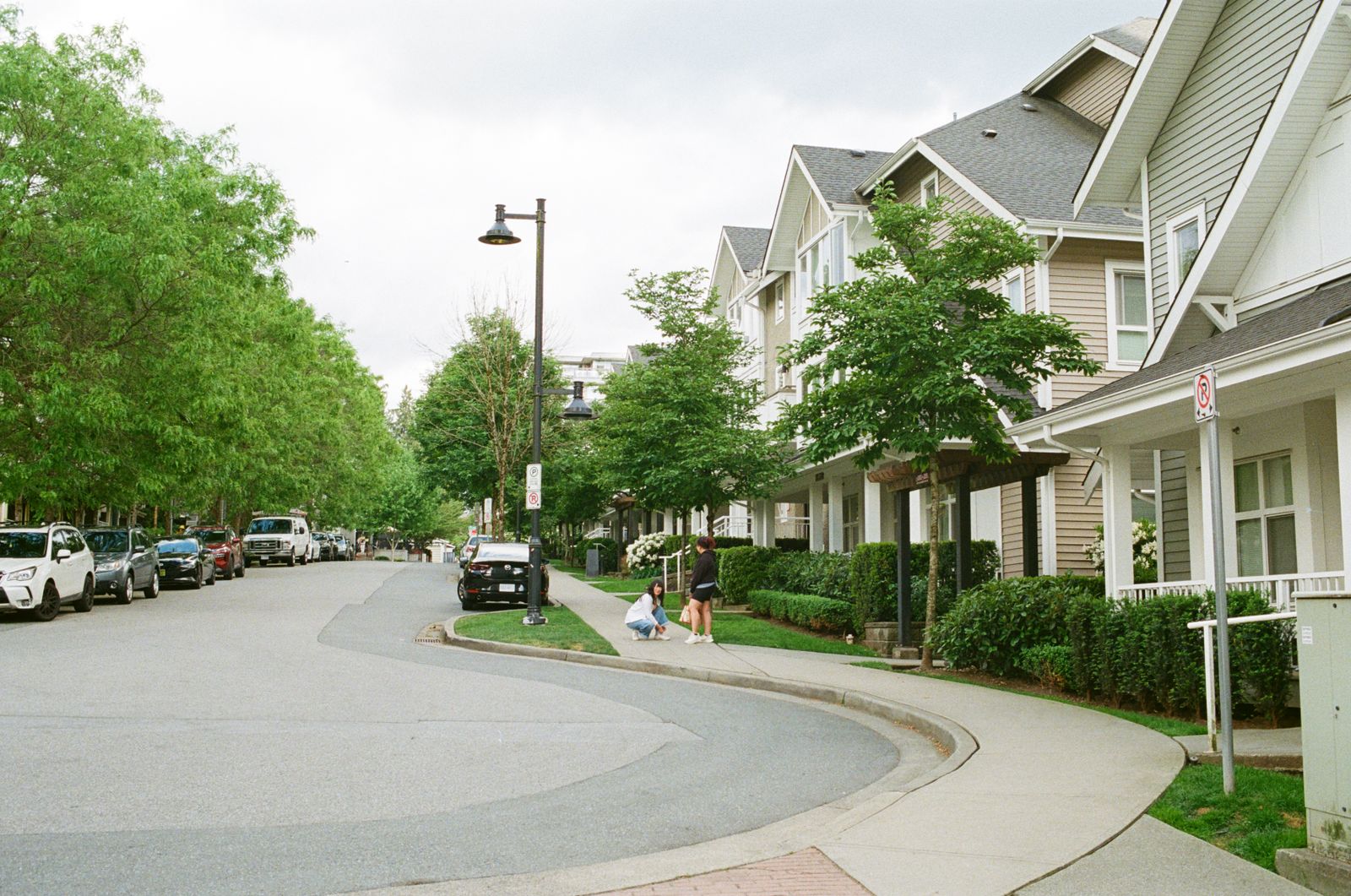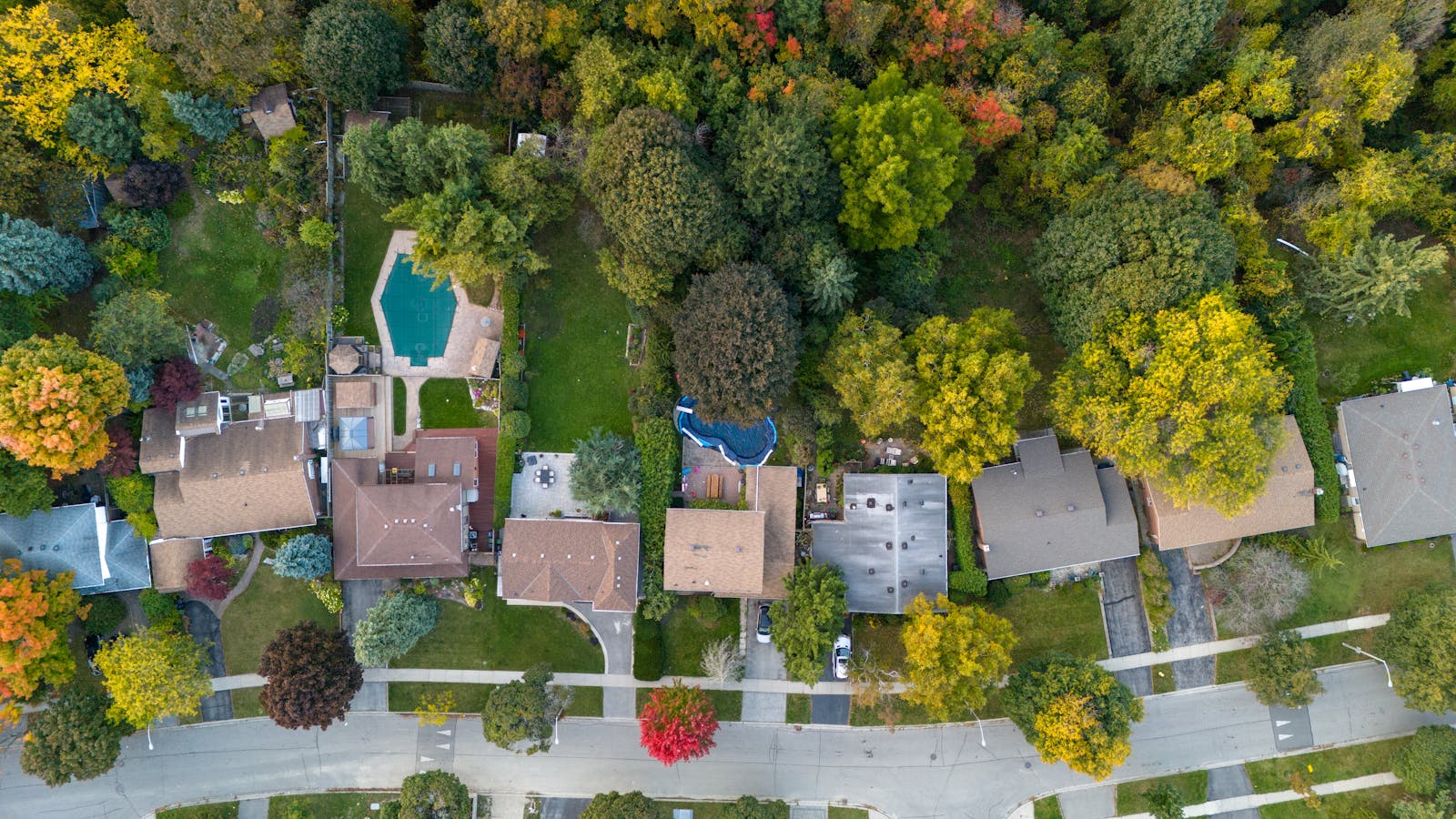
Buying your first home in the Fraser Valley is one of the most significant financial decisions you will ever make. It is also one of the most confusing. The rules have changed. The programs have changed. The market has shifted. And most of the advice floating around online is either outdated, American, or written by someone who has never actually bought a home in South Surrey, White Rock, Cloverdale, or Langley.
This guide is written specifically for first time buyers in the Fraser Valley in 2026. It covers every step of the process from figuring out what you can afford to getting your keys, including the mortgage programs most buyers do not know exist, the mistakes that cost people thousands of dollars, and the questions you should be asking that most people never think to ask.
By the time you finish reading this you will have a clearer picture of what the path to ownership actually looks like in this market right now.
Can You Actually Afford to Buy in the Fraser Valley Right Now?
The honest answer for most first time buyers in the Fraser Valley is yes, but the path looks different depending on your situation. The Fraser Valley offers genuine entry points that do not exist in Vancouver proper. Condos in Cloverdale and Langley starting in the $400,000s. Townhomes in Grandview Heights and Willoughby in the $600,000 to $800,000 range. Detached homes in Abbotsford and Mission that still trade below $800,000 for the right product.
The critical first step is understanding the difference between what you think you can afford and what a lender will actually approve you for. Those two numbers are often very different and the federal mortgage stress test is the primary reason why.
Under rules set by the Office of the Superintendent of Financial Institutions, every mortgage applicant in Canada must qualify at the higher of their contracted rate plus 2% or 5.25%, whichever is greater. In practical terms this reduces your maximum purchase price by roughly 20% compared to what you would qualify for at your actual mortgage rate.
If you think you can afford a $700,000 home based on your monthly budget, the stress test may mean you actually qualify for $560,000. Knowing this number before you start searching is not optional. It is the foundation of everything else.
The Down Payment: How Much Do You Actually Need?
Down payment rules in Canada are set federally and depend on the purchase price of the property. According to the Government of Canada's down payment requirements, the minimums are as follows.
For homes priced under $500,000 the minimum down payment is 5% of the purchase price. For homes between $500,000 and $999,999 it is 5% on the first $500,000 and 10% on the portion above that. For homes at $1,000,000 or above the minimum is 20% and mortgage default insurance through CMHC is not available at that price point.
This means a first time buyer purchasing a $750,000 townhome in Grandview Heights would need a minimum down payment of $50,000. That is $25,000 at 5% on the first $500,000 and $25,000 at 10% on the remaining $250,000.
There are two important programs designed specifically to help first time buyers accumulate or access that down payment.
The First Home Savings Account, or FHSA, is one of the most powerful savings tools introduced in Canada in recent memory. It allows eligible first time buyers to contribute up to $8,000 per year to a maximum lifetime contribution of $40,000. Contributions are tax deductible like an RRSP and withdrawals for a qualifying home purchase are tax-free like a TFSA. It combines the best features of both accounts. The Canada Revenue Agency's FHSA page has the full eligibility requirements and contribution rules.
The Home Buyers Plan allows first time buyers to withdraw up to $35,000 from their existing RRSP toward a qualifying home purchase without triggering tax on the withdrawal. If you are buying with a partner who also qualifies as a first time buyer, you can each withdraw $35,000 for a combined $70,000. The withdrawn amount must be repaid to the RRSP over 15 years. Full details are available through the CRA's Home Buyers Plan page.
If you have not opened an FHSA yet and you are planning to buy in the next two to three years, open one today. Even if you cannot maximize the contributions immediately, getting the account open starts your eligibility clock.
Mortgage Default Insurance: What It Is and What It Costs
When your down payment is less than 20% of the purchase price, your mortgage must be insured against default. In Canada this insurance is provided primarily by the Canada Mortgage and Housing Corporation, known as CMHC, as well as by private insurers Sagen and Canada Guaranty.
The insurance premium is calculated as a percentage of your mortgage amount and varies based on your down payment size. At 5% down the premium is 4% of the mortgage. At 10% down it is 3.1%. At 15% down it is 2.8%. The premium is added directly to your mortgage balance so you do not pay it out of pocket at closing but you do pay interest on it over the life of your mortgage.
On a $700,000 purchase with a 5% down payment of $35,000, the insured mortgage is $665,000 and the CMHC premium is $26,600, bringing the total mortgage to $691,600. Understanding this number matters because it affects your monthly payment and your total borrowing cost.
The upside of insured mortgages is that lenders typically offer their best rates on insured files because the risk is backstopped by the insurer. In many cases a buyer with 5% down will qualify for a better rate than a buyer with 25% down on an uninsured mortgage, which seems counterintuitive but reflects how lenders actually price risk.
Getting Pre-Approved: What It Actually Involves
Pre-approval is the step most first time buyers either skip or approach too casually. Getting a number from your bank over the phone is not a pre-approval. A real pre-approval involves a lender reviewing your actual documentation and providing a written commitment to lend up to a specified amount at a specified rate for a specified period, typically 90 to 120 days.
The documents you will need to provide for a proper pre-approval include your most recent Notice of Assessment from the Canada Revenue Agency, which you can access through My CRA Account. You will also need your two most recent T4 slips, recent pay stubs showing your current income, three to six months of bank statements showing your savings and the source of your down payment, and a photo ID.
If you are self-employed the documentation requirements are more extensive and typically include two years of T1 General tax returns, your Notice of Assessment for both years, and financial statements for your business if incorporated. Self-employed borrowers are not unable to get mortgages but the qualification process is different and working with a mortgage broker who understands self-employed lending is important.
The rate hold that comes with a pre-approval is genuinely valuable in a market where rates are moving. In the current environment, with bond yields rising in response to geopolitical developments and inflation pressure building, having a rate locked in while you search protects you from paying more if rates increase before you find your home.
First Time Buyer Programs in BC: What Is Available Right Now
Beyond the federal FHSA and Home Buyers Plan, British Columbia has its own programs designed to reduce the cost of entry for first time buyers.
The BC Property Transfer Tax First Time Home Buyers Exemption eliminates property transfer tax on purchases up to $835,000 for qualifying first time buyers, and provides a partial exemption on purchases between $835,000 and $860,000. Property transfer tax in BC is calculated at 1% on the first $200,000 of the purchase price and 2% on the remainder up to $2,000,000. On a $750,000 purchase that is $13,000 in tax that a qualifying first time buyer does not pay. The BC Government's property transfer tax exemption page has the current thresholds and eligibility requirements.
The BC Home Owner Grant reduces annual property taxes for eligible homeowners. For the basic grant the threshold is set annually and applies to primary residences. First time buyers who purchase their primary residence in BC become eligible for this grant from their first full year of ownership. Current thresholds are available through BC Assessment.
Understanding What You Are Buying: The Due Diligence Every First Time Buyer Needs
One of the most common and expensive mistakes first time buyers make is not fully understanding what they are purchasing before removing subjects. The subject conditions in a BC real estate contract are your protection period. Once they are removed, the deal is firm and your deposit is typically at risk if you walk away.
For strata properties including condos and townhomes, the strata documents review is one of the most important steps in the process. The Form B Information Certificate, strata minutes for the past two years, the depreciation report, the strata financial statements, and the bylaws all tell you critical information about the health of the strata corporation, any upcoming special levies, ongoing disputes, and how well the building has been maintained.
The Strata Property Act of British Columbia governs strata corporations in BC and gives buyers specific rights to access strata documents before completing a purchase. Understanding what you are reading in those documents, or working with someone who can interpret them for you, is essential before you commit.
For detached homes a professional home inspection conducted by a qualified inspector is the standard due diligence tool. The inspector will review the structure, roof, foundation, electrical, plumbing, and mechanical systems and provide a written report detailing any deficiencies. The cost is typically $500 to $800 and it is one of the highest return investments in the home buying process.
In competitive markets it has become more common for sellers to provide a pre-listing inspection to buyers to remove the inspection condition from offers. If a pre-listing inspection is provided you can review it, but you should also understand that the inspector was engaged by the seller and consider whether an independent review is warranted given the age and condition of the property.
The Neighbourhood Question: Where Should a First Time Buyer Look in the Fraser Valley?
The answer depends entirely on what you value most and what your budget supports. But here is an honest breakdown of what each major area offers a first time buyer in 2026.
Grandview Heights in South Surrey is the most popular area for first time buyers who want to stay in the South Surrey address. Newer construction, good schools, walkable amenity access, and a price point that represents relative value compared to the established pockets nearby. Condos and townhomes here give first time buyers a realistic entry into the South Surrey market.
Cloverdale and Clayton Heights offer the best value for first time buyers who want newer construction with more space. Townhomes here can be $100,000 to $200,000 less than comparable product in South Surrey. The community has strong schools, a genuine town centre, and a character that most masterplanned communities never develop. For buyers willing to look slightly outside South Surrey proper this area consistently surprises people.
Willoughby Heights in Langley is where a significant number of first time buyers have landed over the past five years. Newer detached homes, townhomes, and condos across a range of price points. The challenge in Willoughby is that not all areas are equal in terms of walkability and amenity access, so knowing which streets and sections to focus on matters.
Abbotsford and Mission represent the frontier of affordability in the broader Fraser Valley. Detached homes are still attainable for first time buyers here at price points that have disappeared from Surrey and Langley. The commute to Metro Vancouver is the trade-off and with hybrid work models now more established, that trade-off makes more sense for more buyers than it did five years ago.
The Mortgage You Choose Matters as Much as the Rate
First time buyers tend to fixate on the interest rate and pay less attention to everything else about their mortgage. That is understandable because the rate is the number that gets quoted in headlines and advertisements. But the structure of your mortgage, your term, your amortization, your prepayment privileges, and whether you choose fixed or variable all have consequences that outlast the rate.
The amortization period is how long it would take to pay off your mortgage if you made only the minimum required payments. The maximum amortization for an insured mortgage in Canada is 30 years as of late 2024, following a recent policy change by the federal government designed to help first time buyers manage monthly payments. A 30 year amortization lowers your monthly payment compared to 25 years but significantly increases your total interest paid over the life of the loan. Both options are legitimate depending on your cash flow situation.
Prepayment privileges allow you to pay down your mortgage faster than required without penalty. Most lenders offer annual lump sum prepayment rights of 10% to 20% of the original mortgage balance and the ability to increase your regular payment by a similar percentage. Using these privileges consistently, even with modest extra payments, compresses your amortization significantly and saves tens of thousands of dollars in interest over time.
The portability feature allows you to move your existing mortgage to a new property without triggering a prepayment penalty, provided you are buying and selling at the same time and your lender approves the new property. For first time buyers who know they are likely to move within five years, portability is a feature worth specifically asking about when comparing mortgage products.
Why Having One Advisor for Both Real Estate and Mortgages Changes Everything
The standard home buying experience involves at minimum two separate professional relationships that rarely communicate. Your realtor is focused on finding the right property and negotiating the best price. Your mortgage advisor is focused on getting you approved and quoting a competitive rate. Neither one fully understands what the other is doing with your file.
This creates real consequences for buyers. A realtor who does not know your exact mortgage qualification may show you properties you cannot afford or underestimate how aggressively you can make an offer. A mortgage advisor who does not understand your real estate timeline may put you in a five year fixed rate mortgage when you realistically plan to upsize in three years, which sets you up for a prepayment penalty that could cost you $20,000 or more when the time comes.
When your realtor and your mortgage broker are the same person those gaps do not exist. Your purchase price, your down payment structure, your mortgage term, your timeline, and your exit strategy are all considered together in a single conversation. For first time buyers who are navigating this process for the first time without the benefit of prior experience, having one informed advisor looking at the full picture is not just convenient. It is a genuine financial advantage.
Mortgage brokers in BC are licensed and regulated by the BC Financial Services Authority. You can verify any mortgage broker's licence status through the BCFSA's public registry before working with them.
The Closing Costs First Time Buyers Forget to Budget For
The down payment gets all the attention but closing costs are the number that catches first time buyers off guard. In BC the typical closing costs for a first time buyer range from 1.5% to 4% of the purchase price beyond the down payment, depending on whether property transfer tax applies and several other factors.
Legal fees for a residential purchase typically run $1,200 to $2,000 for a straightforward transaction. The notary or lawyer reviews the title, prepares the transfer documents, handles the mortgage registration, and ensures the funds flow correctly on completion day.
Title insurance is typically required by lenders and costs $200 to $400. It protects against title defects, survey issues, and certain types of fraud that could affect your ownership rights.
Home insurance must be in place before your lender will advance the mortgage funds. Annual premiums for a condo or townhome in the Fraser Valley typically range from $800 to $2,000 depending on the building type, age, and coverage selected. Detached home insurance is higher and varies more significantly based on location and property characteristics.
Property tax adjustments at closing are common. If the seller has prepaid property taxes for the year you will owe them a proportionate reimbursement for the period you will own the property. This number can range from a few hundred dollars to several thousand depending on the closing date and the property's assessed value.
For strata properties, strata fee adjustments work the same way. If the seller has prepaid strata fees for the month you will reimburse them for your portion of that month.
Your Step by Step Action Plan for Buying Your First Home in the Fraser Valley
If you are a first time buyer and you want to move from where you are today to owning a home in the Fraser Valley, here is the order of operations that gives you the most efficient path.
Open an FHSA today if you have not already. Even a small contribution starts the clock on your tax-free savings room.
Gather your financial documents. Two years of T4s or T1 Generals, your most recent Notice of Assessment, recent pay stubs, and three months of bank statements. Having these ready accelerates the pre-approval process significantly.
Get properly pre-approved. Not a phone quote. A full pre-approval with a rate hold that gives you a written commitment you can act on.
Define your neighbourhood and property type priorities. Be honest about your commute tolerance, your lifestyle needs, and how long you realistically plan to stay in the first property.
Set up automated listing alerts so you see new inventory the moment it hits the market. In active price bands in the Fraser Valley properties move in days not weeks.
Understand your offer conditions. Know what subjects you need and what you are willing to waive under what circumstances. Never waive a financing condition without a fully underwritten approval from your lender.
Have your deposit funds liquid and accessible. The deposit is typically due within 24 hours of offer acceptance and it needs to be in a bank account you can transfer from immediately, not in investments or a locked term deposit.
Know your total budget including closing costs before you make an offer. The purchase price is not the number you need to have covered. The purchase price plus 2% to 4% for closing costs is.
Talking to Someone Who Does Both
Most first time buyers spend more time researching which car to buy than they spend on their mortgage structure. That is understandable because mortgages are complicated and the process feels overwhelming. But the decisions you make in the first transaction set the foundation for every real estate and financial move you make afterward.
I work with first time buyers across South Surrey, White Rock, Cloverdale, Langley, Surrey, and the broader Fraser Valley. As a licensed realtor and mortgage broker I handle both sides of the transaction which means your real estate search and your financing are aligned from the very first conversation.
If you want to understand what buying your first home in the Fraser Valley actually looks like for your specific situation, reach out. There is no cost to the conversation and no obligation to work with me after it.